

|

|
Optimization helps organize milling and turning operations into a cleaner, faster, and easier-to-check machining program. Use it to improve the sequence, reduce unnecessary movements, and prepare a safer NC output. |

Optimization is the process of reviewing and reorganizing machining operations so the program is more efficient without changing the required machining result. Instead of simply running operations in the order they were created, the programmer can group and sequence them by practical criteria such as tool, machining plane, work origin, technology, and machining time.
In milling, this is especially useful for grouping compatible operations by tool or workplane, reducing repeated tool changes and unnecessary repositioning. In turning, it helps review the order of roughing, finishing, drilling, grooving, and other operations so the program remains logical, safe, and easy to control.
Key point: Optimization does not replace programmer judgment. The final sequence must always be checked against the machine, clamping, tool access, origins, and simulation result.
Why we use it
-
Reduce cycle time by limiting non-cutting movements and repeated approaches.
-
Cut unnecessary tool changes by grouping operations when possible.
-
Clarify the machining program to make inspection easier.
-
Compare tools, cutting conditions, and estimated machining time in one workflow.
-
Improve repeatability for similar jobs.
-
Prepare a safer NC program before post-processing.
|
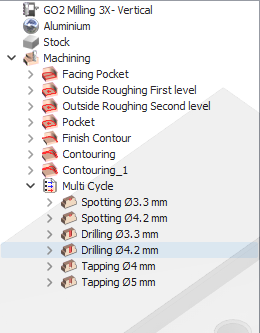
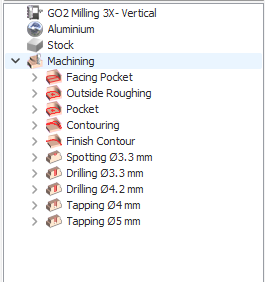
The images below show the machining tree before and after optimization: when several cycles use the same tool, they are merged together, producing a shorter and clearer machining tree. |
|
|
|